How much does it cost to build a data stack from scratch?
The cost of your own data stack goes far beyond the cloud bill. See the components that are usually overlooked and why the self-service model changes the math.
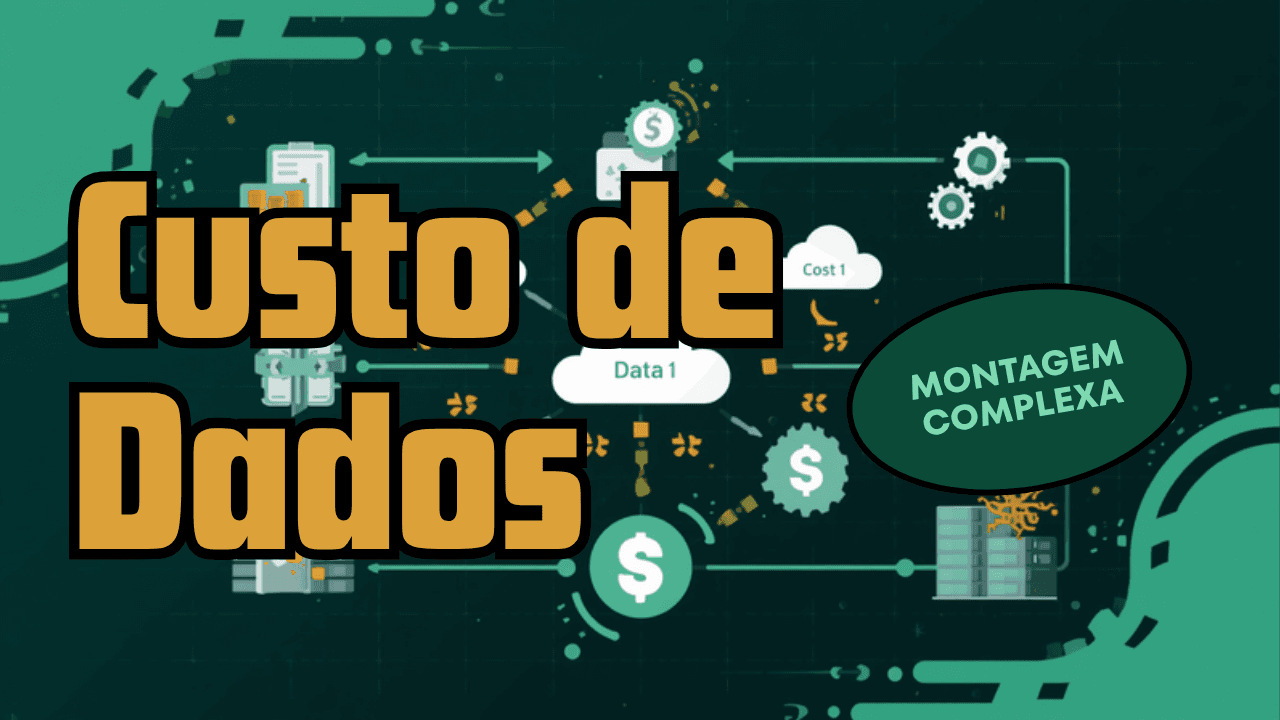
When a company decides to "get its data in order," the first estimate usually looks only at cloud infrastructure — after all, that's what has a list price you can easily look up. In practice, building a data stack from scratch adds up across several fronts, and the biggest one is almost never the cloud. Understanding these line items helps you compare options honestly.
People: the most expensive item
An in-house data stack needs people: a data engineer to build and maintain the pipelines, a BI or data analyst to model data and produce analysis, IT/cloud support and someone responsible for ongoing maintenance. In many markets, this is the most expensive component — and the hardest to hire and retain, because these profiles are in high demand. Without these people, the project stalls; with them, fixed monthly costs climb fast and never stop.
Infrastructure
After people comes the infrastructure that has to be provisioned, configured and maintained:
- Storage and datalake;
- Processing and an analytical database;
- Orchestration of pipelines (scheduling, dependencies, reruns);
- Logs, monitoring and backups;
- Access control, security and data isolation.
Each item is manageable on its own, but the real cost lies in making them all work together, reliably, month after month.
Implementation: time is a cost too
Then there's the time until the stack goes live. Until the project delivers, the company keeps deciding in the dark or in spreadsheets. Weeks or months of implementation are a real opportunity cost — especially for anyone who needed the data yesterday.
Ongoing maintenance: the cost that never ends
A data stack isn't a project that ends — it's an operation that keeps going. Pipelines break when a source changes format, queries need tuning, new sources come in, permissions change, documentation has to be kept up and governance evolves. This recurring cost is the most underestimated in the initial budget, because it doesn't show up in the early excitement, but it arrives every month afterward.
Why any fixed number is only a reference
The real cost depends on data volume, number of sources, refresh frequency, security requirements and the level of governance. So be wary of fixed quotes presented as absolute truth: they're estimates for comparison. What matters is seeing that the bill has many more lines than "the cloud invoice" — and that most of them are recurring.
What changes with the self-service model
A self-service platform replaces much of that upfront investment and team with a monthly subscription plus usage credits. You don't build every piece from scratch or hire a whole team to run the data: you use a ready-made stack and pay for what you consume, predictably. It doesn't replace a full data department in every scenario, but it greatly lowers the barrier to getting started.
How a platform like ingestia.io helps
ingestia.io brings together datalake, pipelines, layers, SQL, native BI, AI and governance in a monthly plan starting at R$ 499 (Brazilian reais), with prepaid credits for processing. That cuts the need to build everything from scratch and gives you cost control — you set a cap, track consumption in real time and get an alert when 20% of your credits remain.
The goal is to deliver the complete platform for moving past scattered data: connect sources, organize them into Bronze, Silver and Gold layers, transform with a wizard or SQL, and use the data wherever it makes sense — in the native BI (with dashboards, measures and alerts), by asking the AI in plain language, in AI Analyst reports, or through APIs, webhooks and external tools like Power BI and Excel. All on a monthly plan with usage credits, consumption tracked in real time — and no data team required to get started.
Does your company need to centralize data?
Take the ingestia.io Data Structure Simulator and find out which path makes the most sense to organize your sources, cut rework and build a reliable foundation for reports, dashboards and integrations.